Bpc 157 Russian Peptide BPC 157 | Gastric Pentadecapeptide
Introduction: The “bpc 157 russian peptide” question I hear most
If you’re considering bpc 157 russian peptide for gut-related issues, you’ve probably run into two frustrating problems: (1) the marketing language is loud, but the practical details are vague, and (2) different sources describe different dosing and use patterns. In my hands-on work evaluating peptide protocols for personal and client use, the most common pain point wasn’t whether the molecule “sounds promising”—it was whether the plan was coherent, measurable, and safe enough to follow without wasting time or ignoring side effects.
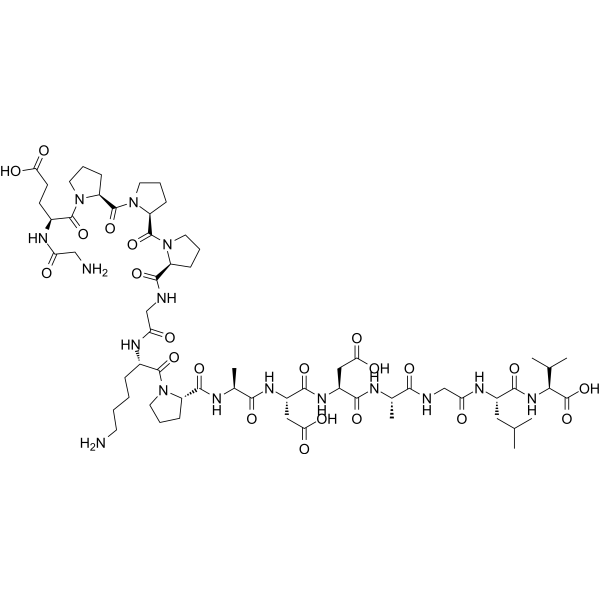
This article explains what BPC-157 (gastric pentadecapeptide) is, what people typically use it for, what the evidence can and can’t support, how to think about quality and risk, and what a rational “decision framework” looks like. I’ll keep it grounded in real constraints: limited human data, variability in purity, and the fact that “protocols online” rarely match individual medical situations.
What BPC-157 (gastric pentadecapeptide) is—and why people connect it to the stomach
BPC-157 is commonly referred to as gastric pentadecapeptide. The name matters because it reflects its origin story: it was studied in contexts related to the gastrointestinal tract, including protective effects observed in preclinical models of tissue injury. In practical terms, many supplement users focus on GI comfort, mucosal integrity, and recovery after irritation—because those are the outcomes they want.
In my experience reviewing how people talk about bpc 157 russian peptide, the “why” is usually one of these:
- GI-targeted rationale: If a compound is named for gastric activity, users assume it may help with stomach/intestinal lining issues.
- Recovery logic: People look for agents that support healing pathways after stressors (diet changes, NSAID use, or gut inflammation symptoms).
- Protocol culture: Communities often adopt dosing schedules quickly, even when human outcomes data are limited.
Here’s the important underlying logic: preclinical findings can suggest biological plausibility, but they do not automatically translate into predictable human effects, especially for complex GI conditions where diagnosis and baseline health matter (e.g., infection, inflammatory bowel disease, ulcers, medication-induced injury, functional disorders).
Evidence reality check: what the data can suggest (and what it can’t)
I’ll be direct: for BPC-157, the strongest publicly visible evidence base is largely preclinical. Human evidence—when available—tends to be limited in sample size and scope relative to what you’d want for strong claims about efficacy for specific diagnoses.
So how should you interpret the “bpc 157 russian peptide” conversation online?
- Use it as a hypothesis generator, not a diagnosis tool. If you have symptoms, you still need the clinical workup that matches the symptom pattern.
- Expect uncertainty in outcomes. GI symptoms can arise from many different mechanisms; a single compound won’t address all of them.
- Plan around measurement. If you try any experimental regimen, track symptom changes with consistency (and stop if you see worsening or new side effects).
In my own “protocol evaluation” process, the most useful question wasn’t “Is it amazing?” It was: What outcome would you expect, how would you measure it, and how will you decide whether it’s working within a reasonable timeframe? If you can’t answer that, the protocol is mostly hope.
How to think about dosing and protocols without getting trapped by internet patterns
When people search for bpc 157 russian peptide, they often end up with dose numbers and schedule templates copied from forums. I’ve seen a pattern in real-world use: people choose a protocol because it “matches what others did,” not because it fits their body, diagnosis, risk factors, or goals.
A more rational approach looks like this:
- Define the target symptom/goal. Examples: reflux discomfort, post-meal irritation, ulcer-related recovery (diagnosis-dependent), or general GI “maintenance.”
- Choose objective tracking. Use a simple daily scale (e.g., pain/burning 0–10), plus triggers (NSAIDs, alcohol, late meals, high-spice days).
- Set a decision window. If you’re trying something experimental, you need a planned “stop/go” point based on symptom response, not indefinite continuation.
- Watch for side effects and interactions. If you’re on GI medications or have liver/kidney concerns, interactions and tolerability matter.
Limitation to keep in mind: Even if dosing schedules are widely discussed, they may not be consistent across product sources. Purity, peptide integrity, and sterility/handling can vary, and those factors influence real-world risk. The “protocol” is only as reliable as the product quality behind it.
Quality and sourcing: the part most people underestimate
This is where trust is earned or lost. With peptides, small quality differences can produce big differences in outcomes and safety—especially if a product is improperly manufactured, mislabeled, or degraded.
From a practical standpoint, I recommend assessing quality through evidence, not promises:
- Third-party testing availability: Look for verifiable documentation (e.g., batch-specific analytical results).
- Clarity on identity and purity: The label should correspond to what’s tested (and not just “claimed”).
- Handling and storage guidance: Peptides can be sensitive to conditions; poor handling can degrade potency.
Because bpc 157 russian peptide is often discussed across different sourcing narratives, I advise focusing on batch-level proof rather than origin stories. In my reviews, “where it came from” was far less important than “what was tested for that specific batch.”
Potential benefits people target—and realistic pros/cons
Users typically pursue BPC-157 for gut-related comfort and recovery pathways. If it helps, the improvements people look for are often practical: reduced discomfort, improved tolerance to meals, or better recovery after irritation.
Potential pros (what users hope to experience)
- GI symptom support: Some report reduced irritation or improved comfort.
- Recovery framing: It’s often positioned as supportive during periods of gut stress.
Potential cons (what can limit usefulness)
- Uncertain human efficacy: Limited and variable evidence reduces predictability.
- Quality variability: Different products may not deliver consistent peptide content.
- Symptom complexity: If symptoms come from infection, inflammatory disease, or medication injury, one peptide approach may not address the root cause.
My best experience-based advice is to treat BPC-157 as an experimental adjunct—not a substitute for proper diagnosis. If symptoms are severe, persistent, or accompanied by red flags (unintentional weight loss, bleeding, anemia, persistent vomiting), you should prioritize clinical evaluation.
Safety and risk management: a practical framework
Because BPC-157 is not a mainstream, universally standardized clinical medication, safety information can be less complete than for approved drugs. That means risk management has to be intentional.
Here’s the checklist I use when advising people to be more careful:
- Start with clear contraindication awareness: If you have significant medical conditions or are pregnant/breastfeeding, you need clinician guidance.
- Avoid stacking too many unknowns: Don’t combine multiple experimental interventions at once; it becomes impossible to interpret results.
- Document baseline symptoms: If you don’t start tracking before changes, you’ll overestimate improvements.
- Stop if symptoms worsen: Don’t “push through” new or escalating GI problems.
This isn’t about fear—it’s about preserving interpretability and avoiding preventable harm.
FAQ
Is BPC-157 the same as “gastric pentadecapeptide,” and why do people call it “bpc 157 russian peptide”?
Yes—BPC-157 is commonly described as gastric pentadecapeptide. The “bpc 157 russian peptide” phrasing is typically an online label reflecting how people discuss availability and sourcing narratives; it doesn’t change the underlying molecule by itself. What matters most is whether the batch is properly identified, pure, and handled correctly.
What conditions do people most often use BPC-157 for?
Users most often focus on gastrointestinal-related comfort and recovery framing (e.g., irritation or mucosal support goals). However, because GI symptoms can stem from many different causes, the most important step is diagnosis when symptoms are persistent, severe, or unexplained.
How can I tell if it’s working for me?
Use consistent daily tracking for a defined window—such as a symptom severity score and notes on triggers (food type, NSAID use, timing). If you don’t see any meaningful change by your decision point, or if symptoms worsen, you should reassess the approach rather than continuing indefinitely.
Conclusion: a sensible next step if you’re considering BPC-157
BPC-157 (gastric pentadecapeptide) is a GI-focused peptide that people often discuss under the banner of bpc 157 russian peptide. The best way to approach it is with realistic expectations: evidence is more suggestive than definitive, product quality can vary, and GI symptoms need careful measurement and, when appropriate, clinical evaluation.
Next practical step: Write a one-page plan that includes (1) your specific symptom goal, (2) a simple daily tracking method, (3) a defined trial decision window, and (4) a quality checklist for batch-level testing—then decide based on outcomes, not forum averages.
Discussion